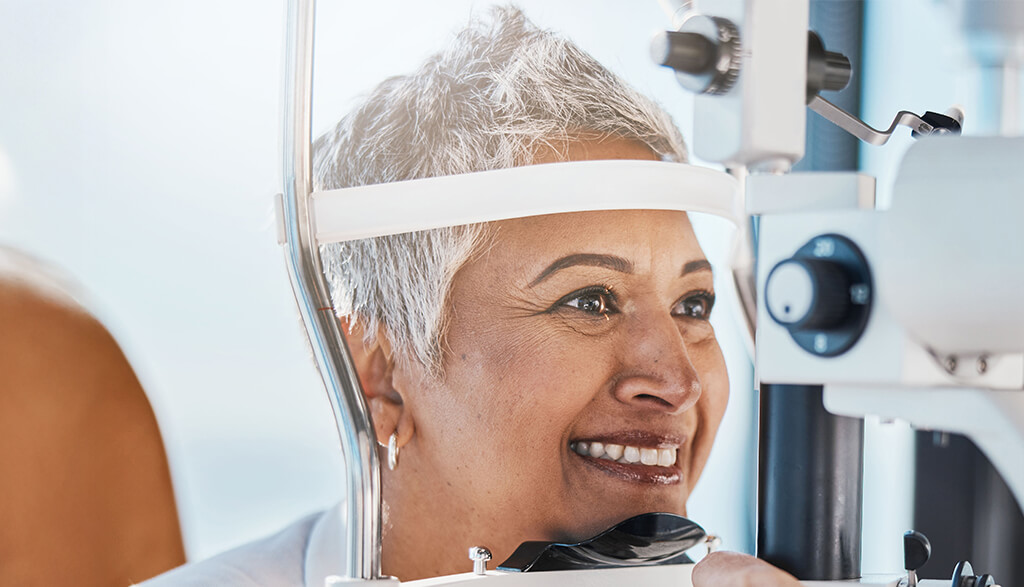
Protect Your Eyes from Diabetes
Just over 1 in 10 Americans lives with diabetes. Diabetes can impact your overall health, including your vision. That’s why we offer diabetic eye exams tailored to monitor your vision for common impacts of diabetes.
Many people are aware of how diabetes impacts overall health, but may not consider how it affects vision. In fact, diabetic eye disease is the leading cause of blindness in working-age adults. Living with diabetes increases your risk of developing eye diseases such as cataracts, glaucoma, and diabetic retinopathy.
Routine, comprehensive eye exams are one of the primary ways you can care for your eyes while living with diabetes, along with regulating your blood sugar. Dr. Dolezal can help monitor your eyes for any changes to your ocular health and recommend treatment or management strategies to protect your vision.
Book Appointment

What Is Diabetes?
Diabetes is a disease that affects your body’s ability to regulate blood sugar levels. This means that too much sugar can stay in your bloodstream without proper management.
Over time, elevated blood sugar levels can lead to various health issues, including serious vision problems. The elevated blood sugar can damage your blood vessels, especially the delicate ones in your eyes.
Eye exams are an important tool to monitor your eye health and catch early signs of diabetes complications. Even if you don’t notice any change in your vision, it’s still important to have your eyes examined regularly, as many conditions develop without symptoms during early stages.
How Does Diabetes Affect Your Vision
Living with diabetes can increase your risk of eye diseases such as diabetic retinopathy, diabetic macular edema, cataracts, and glaucoma. By getting a comprehensive eye exam at least once a year, your optometrist can monitor your eyes for any changes or signs of disease.
Diabetes often impacts the blood vessels in the eyes first, which can lead to glaucoma, diabetic retinopathy, or diabetic macular edema if untreated. Damage to the blood vessels in the eyes can cause them to break or leak fluid into the eyes, impacting vision and possibly causing blindness.
Our comprehensive eye exams include capturing images of your retina and blood vessels inside your eyes and comparing these images with past visits to catch small changes from one exam to the next. The sooner we notice signs of diabetic eye disease, the more options we have to manage it before your vision is impacted.
Diabetic Retinopathy
More than half of people with diabetes are expected to develop retinopathy at some point. Diabetic retinopathy often progresses slowly and may not have noticeable symptoms until irreversible damage to your vision occurs. It typically develops gradually as the blood vessels in your retina swell because of elevated blood sugar levels.
During the early stages, people commonly experience blurry vision. As the condition progresses, it can get more serious. Blood vessels may break and bleed into the macula, which is responsible for central vision, causing vision loss.
Diabetic Macular Edema
Diabetic macular edema occurs when the macula swells. The macula is responsible for your central vision, so impairment can affect the ability to read, write, drive, and recognize faces. This condition is quite serious and can lead to blindness.
Diabetic macular edema may occur if diabetic retinopathy goes untreated and progresses to impact the macula.
Cataracts
Cataracts occur when the normally clear lens in your eye becomes cloudy. This clouded lens is no longer able to focus your vision clearly on your retina, so you may see objects appear hazy, blurry, or experience double vision. When cataracts begin substantially impacting your vision, they can be treated with cataract surgery.
While cataracts often occur naturally as we age, people living with diabetes may develop them earlier and more rapidly.
Glaucoma
Glaucoma is a group of eye diseases characterized by an increase in pressure inside the eye and damage to the optic nerve. In people with diabetes, glaucoma can occur when the blood vessels become damaged and leak fluid into the eye, causing an increase in the internal pressure.
If this fluid cannot drain properly and your eye has elevated internal pressure for an extended period of time, your optic nerve may be damaged. This can cause blindness, as your optic nerve is responsible for sending information from your eyes to your brain.
How We Monitor and Manage Diabetic Eye Disease
Your diabetic eye exam will be similar to our standard comprehensive eye exam. We will monitor the overall health of your eye, including your eye pressure and the health of your inner and outer eye.
We use fundus photography to take photos of the inside of your eye, showing your retina, blood vessels, and optic nerve. We may also use an optical coherence tomography (OCT) machine to create a cross-sectional image of your retina, allowing us to measure the thickness of the layers and identify any subtle signs that could indicate an underlying eye condition.
Although we use both fundus photography and OCT scans in our standard eye exams, we will use them more frequently for higher-risk patients, such as those living with diabetes.
We also recommend more frequent eye exams for our patients with diabetes. This helps us to keep tabs on any impacts to your vision and catch them early. If we do notice signs of eye disease, we will work with you to develop a specific treatment plan based on your condition and its stage.
Be Proactive About Your Eye Health
Don’t wait until you notice symptoms. If you’re living with diabetes, your eyes need a little extra care. Be sure to schedule regular comprehensive eye exams at least once a year to monitor your eye health and protect your vision.
Book Appointment


Visit Our Location
Find us on the corner of Mellen Street and Marsh Avenue. Free parking is available in our parking lot.
Our Address
- 1125 Mellen St
- Centralia, WA 98531
Contact Information
- Phone: 360-736-7385
- Email: info@innovationsineyecare.com
Our Hours
- Monday: 8:00 AM – 4:30 PM
- Tuesday: 8:00 AM – 4:30 PM
- Wednesday: 8:00 AM – 4:30 PM
- Thursday: 8:00 AM – 4:30 PM
- Friday: 8:00 AM – 12:00 PM
- Saturday: Closed
- Sunday: Closed
-
*Closed for lunch from noon to 1:00 PM Mondays–Thursdays
Our Eyewear Brands
Our Google Reviews



- Specialty Eye Care
- Dry Eye Treatment
- Eye Disease Diagnosis & Management
- Digital Eye Strain
- Eyewear & Contacts
- Glasses
- Sunglasses
- Frames Try On
- Order Contacts
- Patient Center
- Make Payment with Credit/Debit
- Pay by Care Credit
- Payment Policy
- Blog
-
Innovations in Eyecare
- 1125 Mellen St
- Centralia, WA 98531
-
P: 360-736-7385
info@innovationsineyecare.com